The most common reason a Miniature Schnauzer smells is the beard. It soaks up water and traps bits of food every time they eat and drink, and if it stays damp it soon smells sour. Other usual causes are a coat that’s overdue for grooming, skin problems the breed is prone to, ear infections, bad teeth and full anal glands. Wash and dry the beard daily and keep up with grooming. If the smell comes with itching, redness, scabs, discharge or pain, take your Schnauzer to the vet.
Table of Contents
Do Miniature Schnauzers smell?
A well-groomed Miniature Schnauzer with healthy skin doesn’t have much of a smell. Their wiry outer coat with a soft undercoat sheds little. But Schnauzers have two features that cause odour: a big beard and leg “furnishings” that collect everything, and skin that in some dogs tends to be oily or bumpy. When a Schnauzer smells, it’s usually one of those, or a health problem.
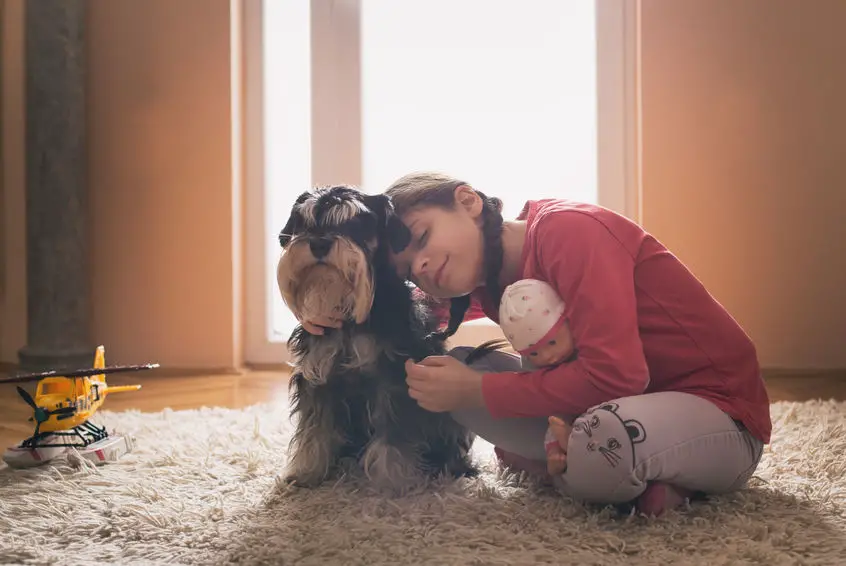
Common causes of Miniature Schnauzer smell
Start with a sniff check: beard, mouth, ears, paws, back and bottom. Where the smell is strongest tells you where to look.
The beard
This is the number one culprit. A Schnauzer’s beard dips into the water bowl and the food bowl at every meal. Crumbs, gravy and saliva get trapped close to the skin, and the hair stays damp for hours. That warm, damp hair starts to smell musty or sour, and it can turn a rusty-brown colour around the mouth. Wet food makes it worse.
If the skin under the beard or around the lips looks red, sore or crusty, or still smells after cleaning, have your vet look at it, as it may be infected.
A coat that’s overdue for grooming
The Schnauzer coat doesn’t fall out much on its own, so dead hair builds up unless it’s clipped or hand-stripped. Between grooms, the longer leg and belly hair tangles and holds mud and moisture. A Schnauzer whose furnishings are matted, or who is several weeks past their groom, often smells “doggy” even if they’ve had a bath.
Skin problems
Miniature Schnauzers have some well-known skin issues. One is Schnauzer comedo syndrome, where small blackheads and crusty bumps form along the back, sometimes becoming infected. If you run your hand down your Schnauzer’s spine and feel lots of little gritty bumps, ask your vet about it. Some Schnauzers also have greasy, flaky skin that holds odour.
Like any dog, Schnauzers can get allergies to fleas, things in the environment or food, and yeast or bacterial skin infections often follow. Signs include a musty or yeasty smell, itching, red skin, licking the paws, and darkened or thickened skin. These need a vet to find and treat the cause. See common skin problems in dogs for an overview.
Ears
Many Miniature Schnauzers have natural folded ears, especially in countries where ear cropping is banned, and many also grow hair inside the ear canal. Folded flaps and hair both cut down airflow and can hold in wax and moisture. A strong yeasty or rotten smell, brown discharge, redness, head shaking, scratching or a head tilt usually means an ear infection. That needs your vet, because ear infections are painful and can get worse fast.
Mouth
Bad breath usually means plaque, tartar or gum disease. With a Schnauzer it can be hard to tell whether the smell is the teeth or the beard, so lift the lips and look. Brown tartar, red gums or loose teeth mean a vet check. Very bad breath can occasionally signal other health problems too.
Anal glands
The two small anal glands near the bottom normally empty when a dog poos. If they don’t, they become full and you’ll notice a strong, fishy smell, and often scooting or licking. Your vet or groomer can empty them. Swelling, redness or obvious pain needs the vet, as the glands can become infected.
Wind and diet
Occasional wind is normal. Regular room-clearing gas can come from a food that doesn’t agree with your Schnauzer, table scraps, or a tummy problem. Keep fatty scraps out of your Schnauzer’s diet, and change food gradually. If gas comes with vomiting, diarrhoea, a sore tummy or your dog being off their food, see your vet promptly. See also foods you should never give your dog.
Rolling in things
Some Schnauzers find fox poo or something dead irresistible. If the smell appeared suddenly after a walk, that’s probably your answer, and a bath will fix it.
How to stop your Miniature Schnauzer smelling
Beard care after meals
Make beard care part of the daily routine. After meals, wipe the beard with a damp cloth, then squeeze it dry with a towel. Comb it out every day or two to remove trapped food. A raised or narrow water bowl, or a no-spill bowl, can help keep the beard from getting soaked.
For a proper clean, a no-rinse face cleanser is handy. Bio-Groom Facial Foam can be worked into the beard and wiped off without rinsing, and it helps lift some of the discolouration. Keep it away from the eyes.
Keep to a grooming schedule
Book regular clips or hand-stripping, and brush the furnishings and beard at home a few times a week with a slicker brush and a steel comb. This removes the dead hair and debris that hold smells. Our guide to bathing and brushing your Miniature Schnauzer covers the tools and technique.
Choose the right shampoo
Brush out tangles before the bath, then rinse well and dry the coat, beard and leg hair thoroughly. Damp furnishings are a common source of lingering smell. Don’t bathe so often that the skin dries out.
If your Schnauzer has a general odour that ordinary shampoo doesn’t shift, a deodorising shampoo can help. My top pick is Fresh Wave Odor Removing Dog Shampoo, which aims to neutralise odour rather than mask it with fragrance. If the smell is coming back within days, though, look for a skin, ear or teeth problem rather than changing shampoos.
For itchy or irritated skin, a gentle oatmeal shampoo such as Nootie Medicated Oatmeal Dog Shampoo can be soothing. If you think your Schnauzer has a skin infection or comedo syndrome, see your vet first. These often need a specific medicated shampoo or other treatment from the vet, and the wrong product can make the skin worse.
This video has some more general tips on dealing with a smelly dog:
Check the ears every week
Lift the ear flaps and have a look and a sniff once a week. Wipe away visible wax from the outer ear only. Ask your vet or groomer whether the hair inside your Schnauzer’s ears should be removed; opinions differ, and it depends on the dog. See DIY grooming for nails, ears and teeth.
Clean the teeth
Brushing your Schnauzer’s teeth regularly with a dog toothpaste keeps plaque down and helps with breath. See how to brush your dog’s teeth. Between brushings, I like Greenies Dog Dental Chews. In my experience they do a good job of cleaning teeth and freshening breath. Pick the size that matches your dog’s weight, and count them as part of the daily food so your Schnauzer doesn’t gain weight.
You can also try dog toys designed to clean teeth. Avoid very hard toys that can crack teeth and rough ones that wear them down, and supervise chewing. A dental spray for dogs can help freshen breath too.
Wash bedding and the beard towel
Wash your Schnauzer’s bed and blankets regularly, along with the towel or cloth you use on the beard. Otherwise you’re just wiping the smell back on.
When to see the vet
See your vet if the smell comes with itching, red or broken skin, bumps or scabs along the back, hair loss, ear discharge or head shaking, a swollen bottom, sore gums, or any sign that your Schnauzer is unwell. Also see the vet if the smell keeps coming back soon after a bath. Grooming won’t fix a medical problem, and an early diagnosis usually means easier treatment.
Summary
For most Miniature Schnauzers, a smell comes down to a wet, food-filled beard or a coat that’s overdue for grooming. Daily beard care, regular clipping or stripping, and good drying after baths solve most of it. If the smell is coming from the skin, ears, mouth or bottom, or comes with any sign of discomfort, let your vet find the cause.
More about Miniature Schnauzers
- Bathing and brushing your Miniature Schnauzer
- Helping with Mini Schnauzer anxiety problems
- Miniature Schnauzer facts
- How big does a Miniature Schnauzer get
Looking for more? Our complete Miniature Schnauzer guide brings together everything we have written about Miniature Schnauzers, from temperament and training to grooming and health.