Most dogs and cats can learn to live together, but it takes a slow, step-by-step introduction rather than putting them in the same room and hoping for the best. Keep them apart at first and let them get used to each other’s smell. Then let them see each other through a gate, and only after that allow short meetings with the dog on a leash. Expect it to take anywhere from a few days to a few months, depending on the animals.
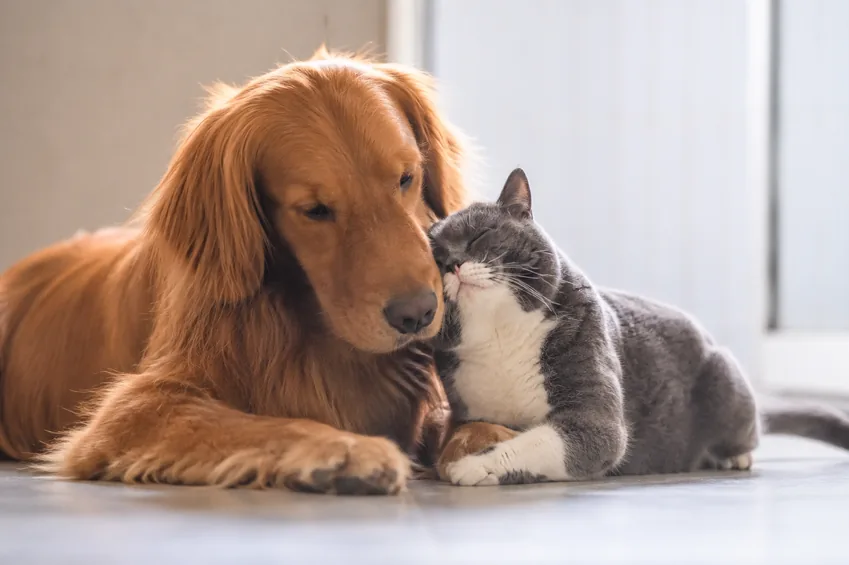
The biggest mistake I see is rushing. One bad first meeting, where the dog chases or the cat lashes out, can set you back weeks. Going slowly at the start is much quicker than repairing a bad first impression.
Table of Contents
Will my dog get along with a cat?
It depends far more on the individual dog and cat than on anything else. Before you bring a new pet home, think honestly about these points.
Your dog’s history and prey drive
A dog that has lived calmly with cats before is a much safer bet than one that has never met a cat or has a habit of chasing them. Many terriers, sighthounds and herding breeds were bred to chase or catch small animals, so they often find a running cat very hard to ignore. That doesn’t mean they can never live with a cat, but you’ll need more patience and more management. If you’re adopting from a shelter or rescue, ask whether the dog has been tested or fostered with cats.
A dog that stares fixedly at a cat, goes stiff and quiet, stalks or lunges is showing predatory interest, not curiosity. If you see that, get help from a qualified trainer or behaviorist before going any further. A small number of dogs can’t safely live with cats.
Your cat’s personality
Confident, easy-going cats usually adjust faster. A cat that is nervous, elderly or has had a bad experience with dogs will need more time and more safe places to retreat to. Cats that run tend to trigger a chase. A cat that holds its ground or walks away calmly often makes introductions easier.
Age and energy level
Puppies and kittens raised together usually accept each other most easily. An older dog or cat that’s set in its routines can still adapt, but it often takes longer. Also think about energy. A boisterous young dog can overwhelm an older cat even if it only wants to play, and its size alone can be a risk to a small kitten.
How to introduce a dog and a cat, step by step
Every step below should last as long as it needs to. Move on when both animals are relaxed at the current stage, not on a fixed schedule. If either one gets stressed, go back a step.
1. Set up separate spaces before the new pet arrives
Give the new arrival its own room for the first days, with food, water, bedding and (for a cat) a litter box. This lets it settle in without being confronted by the resident pet. Make sure the cat has high places it can reach, such as shelves, a sturdy cat tree or a window ledge. Also give it escape routes the dog can’t follow.
2. Swap scents
Before they see each other, let them get used to each other’s smell. Swap bedding or blankets between the two, or rub a soft cloth on one pet and leave it near the other’s food bowl. Reward calm sniffing with a treat. Some people also swap rooms for a while, so each animal explores the other’s space while the other is shut away.
3. Feed them on either side of a closed door
Feed each pet close to the door between their rooms, so they link the other’s smell and sounds with something good. Start with the bowls far enough from the door that both eat comfortably, then move them a little closer over several days.
4. Let them see each other through a barrier
When both are calm at the door, swap to a baby gate or a door opened just a crack. Keep these sessions short. Reward your dog for looking at the cat and then looking back at you, and for lying down calmly. If your dog fixates, whines, barks or lunges, increase the distance and make the next session shorter.
5. Hold short, leashed meetings
Once the dog is relaxed at the gate, try a meeting in the same room with your dog on a leash. Let the cat move freely and choose how close to come. Never hold the cat or carry it up to the dog. Keep your dog busy with simple cues like sit, down and look at me, and reward calm behavior generously. End each session while everyone is still calm.
If your dog’s basic cues need work, it’s worth brushing up first. See tips for training your dog at home and how to reward your dog.
6. Allow supervised time together
When leashed meetings are consistently calm, let your dog drag a light leash around the house during supervised time. That way you can step on it or pick it up if needed. Gradually increase the time they spend together. Until you are completely confident, keep them apart when you can’t watch them.
How long does it take for a dog and cat to get along?
There’s no set timeline. Some pairs are relaxed with each other within a few days. Others take several weeks or a few months. Progress isn’t always steady either, and it’s normal to have a bad day and need to go back a step. Patience and consistency matter more than speed.
Signs it’s going well, and warning signs
Good signs:
- Both eat, sleep and use their usual spaces normally.
- Your dog can glance at the cat and look away, or turn back to you when asked.
- The cat walks through the room with its tail up instead of hiding or bolting.
- They can rest in the same room without either one watching the other.
Warning signs to slow down or get help:
- Your dog stares fixedly, stalks, lunges or won’t respond to you around the cat.
- The cat is hiding most of the time, has stopped eating or is going to the toilet outside the litter box.
- Repeated hissing, growling, swatting or chasing.
A cat that stops eating or using its litter box is under real stress, so take it seriously. If problems persist, talk to your vet and to a qualified trainer or behaviorist.
Keeping the peace once they live together
Give the cat dog-free zones
Your cat should always be able to get away from the dog. High shelves, a stable cat tree, window perches and a room closed off with a gate (with a gap or cat flap the cat can get through but the dog can’t) all work. Make sure cat trees are sturdy enough that a dog bumping into them won’t knock them over.
Feed them separately
Dogs will happily eat cat food if they get the chance, and food is a common cause of squabbles. Feed the cat up high or in a room the dog can’t get into, and feed the dog in its own spot. Pick up any leftovers after meals.
Put the litter box out of the dog’s reach
Many dogs raid litter boxes, which is unpleasant for you and stressful for the cat. Place the box somewhere your dog can’t get into, such as behind a gate or in a room with a cat flap.
Give your dog plenty of exercise
A dog that’s had a good walk and some play or a puzzle toy is much less likely to go looking for entertainment by bothering the cat. Give your dog its own quiet place to rest as well, such as a crate or bed where the cat won’t pester it.
Never punish either pet for the other’s sake
Telling off a dog or cat for growling or hissing can make them link the other animal with bad experiences. Instead, calmly create more space and go back a step in the introduction. Keep rewarding calm behavior when they’re together.
What if my dog keeps chasing the cat?
Chasing is the most common problem, and it’s worth stopping early because it can quickly become a habit, even when the dog seems to be playing. Go back to leashed meetings, keep your dog busy with cues and rewards, and make sure the cat always has an escape route. For a fuller plan, see how to stop a dog chasing cats.
If you have a particular breed in mind, we also have breed-specific guides, including are Beagles good with cats and are Jack Russell Terriers good with cats.