Dachshunds come in two sizes and three coat types. The sizes are standard and miniature (plus a smaller rabbit, or kaninchen, size in FCI countries), and the coats are smooth, long-haired and wire-haired. Any size can have any coat, so you get combinations like a wire-haired miniature or a long-haired standard. Color and pattern are a separate layer on top of that. A red or dapple dachshund is not a separate type, just a standard or miniature dog of one coat type in that color.
The Dachshund was developed in Germany to hunt badgers, which is where the name comes from (Dachs is German for badger, Hund for dog). The short legs and long body were built for following prey underground, and every type below shares that shape. (See 12 facts about Dachshunds.)
Here is how the different types of dachshunds break down, with pictures of each.
Table of Contents
Dachshund sizes
Standard dachshund
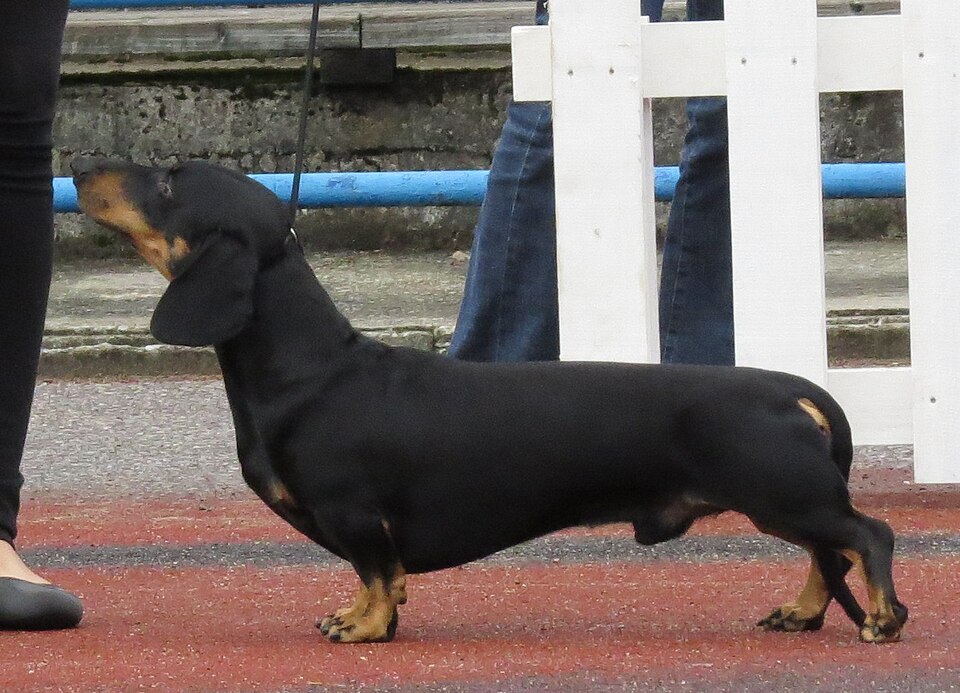
The standard is the original size. The American Kennel Club (AKC) standard describes it as usually between 16 and 32 lb (roughly 7 to 15 kg). A standard is still short, but it is a solid, muscular dog and heavier than most people expect when they pick one up.
Miniature dachshund
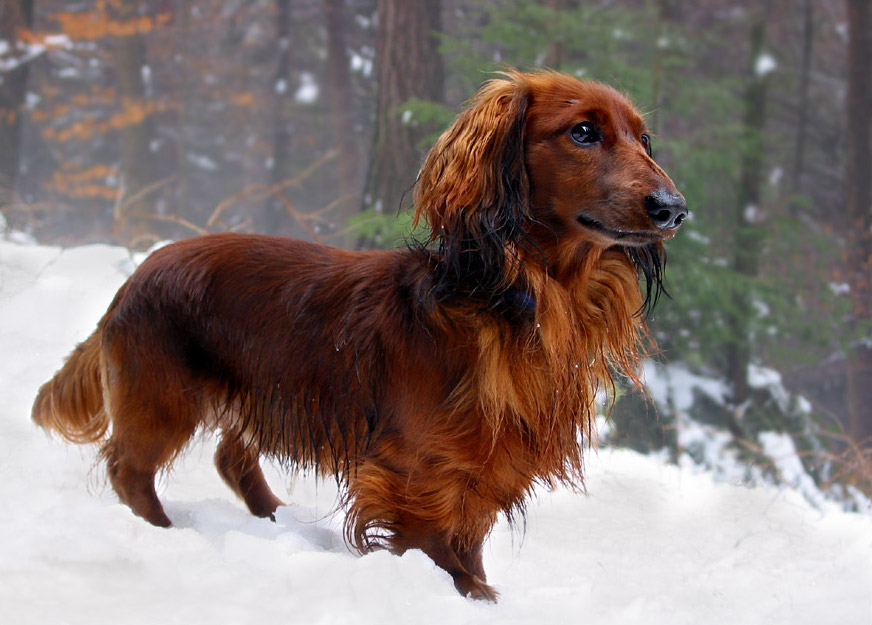
The AKC defines a miniature as 11 lb (about 5 kg) and under at 12 months of age or older. Apart from size, a miniature should look the same as a standard, with the same proportions and the same three coat options.
You will sometimes hear “tweenie” for dogs between the two sizes. It is not an official size, just an informal name. If size really matters to you, ask the breeder about the size of the parents and previous litters.
Whatever the size, the long back is the same. Miniatures are not protected from back problems because they are lighter. See Are back problems common in Dachshunds for what to watch for.
Rabbit (Kaninchen) dachshund
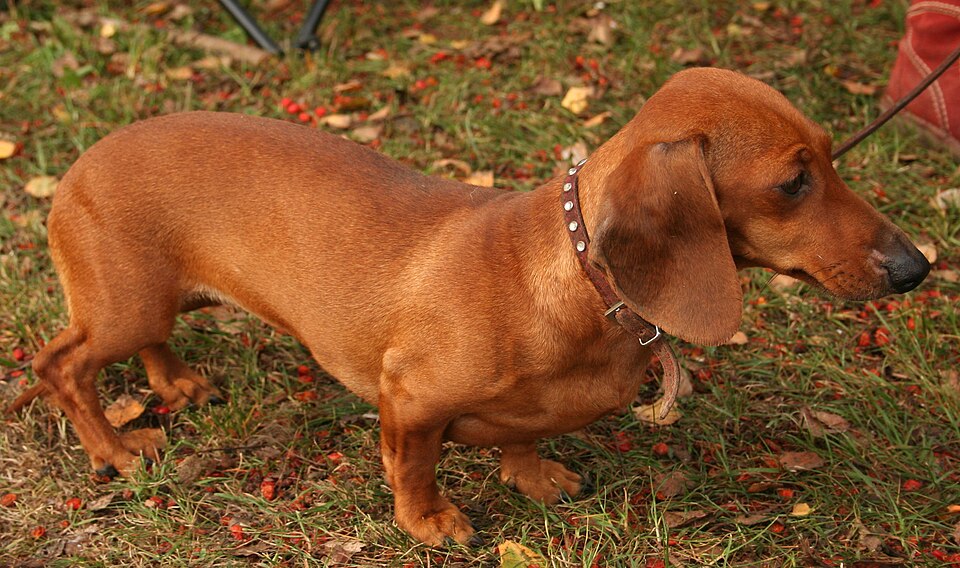
In the US and under the AKC there are only two sizes. However, the FCI (Fédération Cynologique Internationale), which covers most of Europe and many other countries, recognises three sizes: standard, miniature and rabbit, known in German as Kaninchen. The FCI does not measure dachshunds by weight but by chest circumference, taken once the dog is mature (the FCI standard says at a minimum of 15 months old):
- Standard: chest circumference over 35 cm
- Miniature: chest circumference 30 to 35 cm
- Rabbit (Kaninchen): chest circumference up to 30 cm
Measuring the chest tells you what size of burrow the dog can work in, and the rabbit size was bred to go after rabbits in their much smaller warrens. Outside of Europe you rarely see dogs sold as Kaninchen dachshunds, and in the US a dog that small would simply be registered as a miniature.
Dachshund coat types
Smooth (short-haired) dachshund
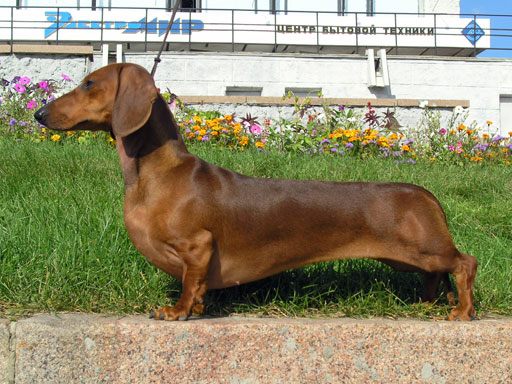
The smooth dachshund, also called the short-haired dachshund, has a short, dense and shiny coat that lies close to the body. It is the easiest coat to look after. A brush once a week with a rubber curry brush or a soft bristle brush will remove dead hair and keep the coat shiny. It also gives you a chance to notice any lumps or bumps.
Don’t confuse low maintenance with no shedding. Smooth dachshunds shed steadily all year, and the short hairs work their way into fabric and furniture. (See Causes of excessive shedding in dogs.)
Long-haired dachshund
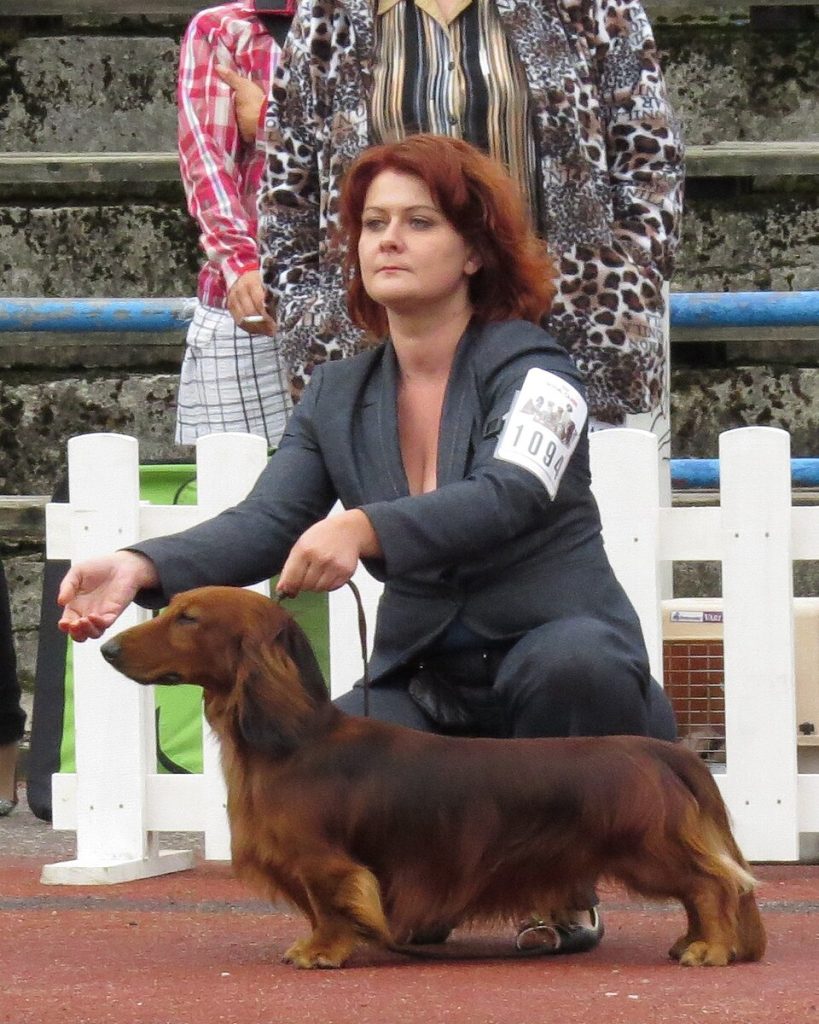
The long-haired dachshund has a sleek, slightly wavy coat that is longer on the ears, chest, underside, backs of the legs and tail. The tail feathering in particular gives them that elegant look. Underneath the long hair there is a close-fitting undercoat.
This coat needs the most regular care of the three. I recommend brushing two to three times a week with a slicker brush, followed by a comb to make sure you have got right down to the skin. Pay extra attention behind the ears, in the armpits and on the feathering on the legs, as these are the places mats form first. A tidy-up trim of the feet and the hair between the pads every few weeks keeps them neat and stops them carrying in dirt. Long-haired dachshunds tend to shed more heavily in spring and autumn, when daily brushing helps. See How to brush a dog for brushing tips.
For more pictures of long-haired Dachshunds see here.
Wire-haired dachshund
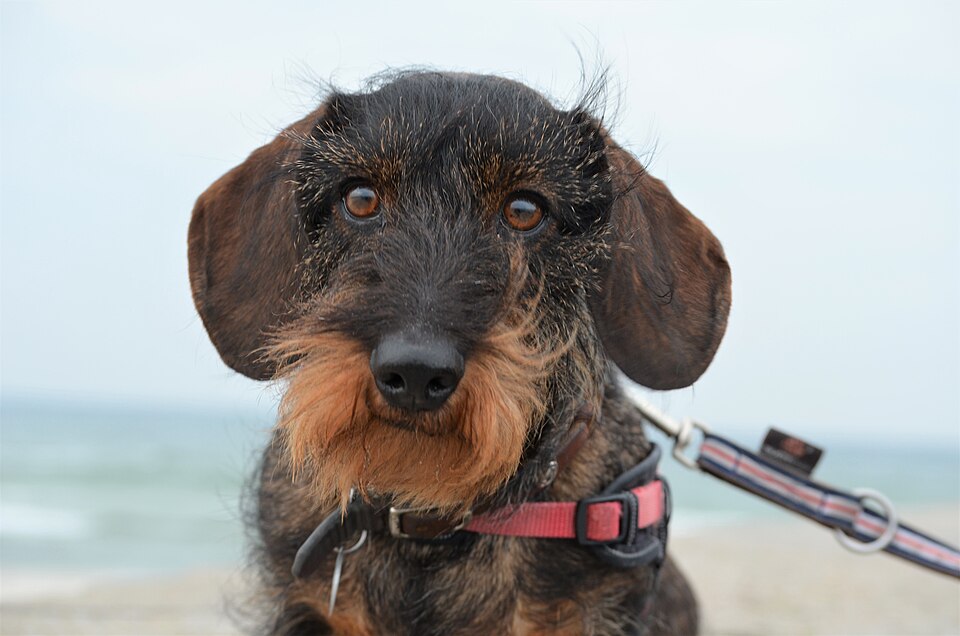
The wire-haired dachshund has a short, harsh, wiry outer coat over a softer undercoat, with bushy eyebrows and a beard that give it a slightly terrier-like face. In the US it is the least common of the three coats, but it is very popular in Germany, where it is still widely kept as a working and hunting dog.
Brush a wire coat once or twice a week to keep it tidy. To keep the harsh texture, the coat should be hand-stripped, which means pulling out the dead outer hair rather than cutting it. Most wire-haired dachshunds need stripping a couple of times a year. If a wire coat is clipped instead, it usually grows back softer and loses some of its color and weather resistance. Not all groomers offer hand-stripping, so ask before you book. Like the long-haired type, wires tend to shed more in spring and autumn. See how to brush a dog for tips.
For more pictures of wire-haired Dachshunds see here.
Dachshund colors and patterns
Dachshunds come in a wide range of colors, and on top of the base color they can carry a pattern such as dapple, brindle or piebald. A color can appear with any coat type and in any size. Kennel clubs don’t all agree on which colors and patterns are acceptable for showing, so check your kennel club’s current standard if that matters to you.
Red
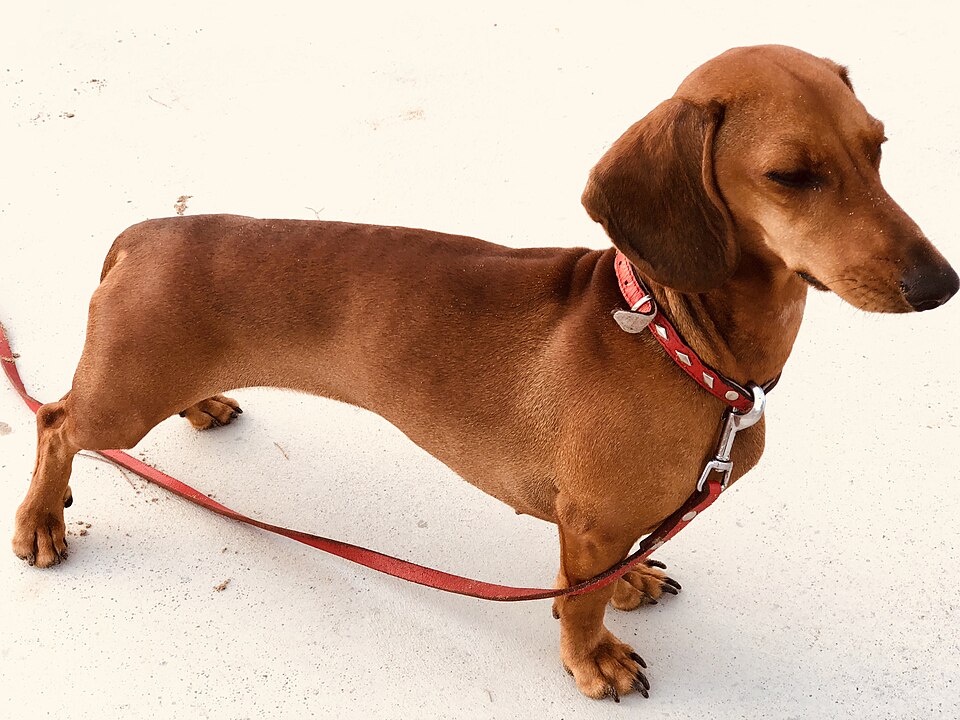
Red is one of the most common dachshund colors. It ranges from a light golden red to a deep mahogany. Some reds have a scattering of black hairs through the coat, which is sometimes called shaded red.
Black and tan
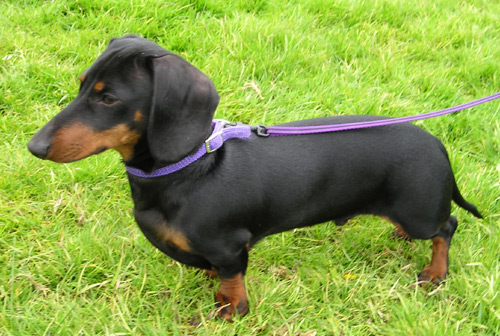
Black and tan is the classic dachshund look and probably the color most people picture. The body is black with tan markings above the eyes, on the muzzle, chest, legs and under the tail. When the markings are a pale cream instead of tan, the color is called black and cream.
Chocolate and tan
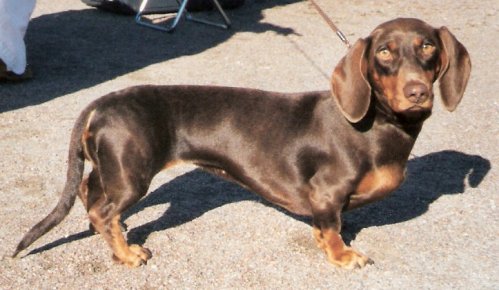
Chocolate and tan has the same markings as black and tan, but the main color is a rich brown. Chocolate dachshunds have a brown nose and brown paw pads rather than black, and often lighter eyes. Chocolate and cream is the same with pale cream markings instead of tan.
Cream
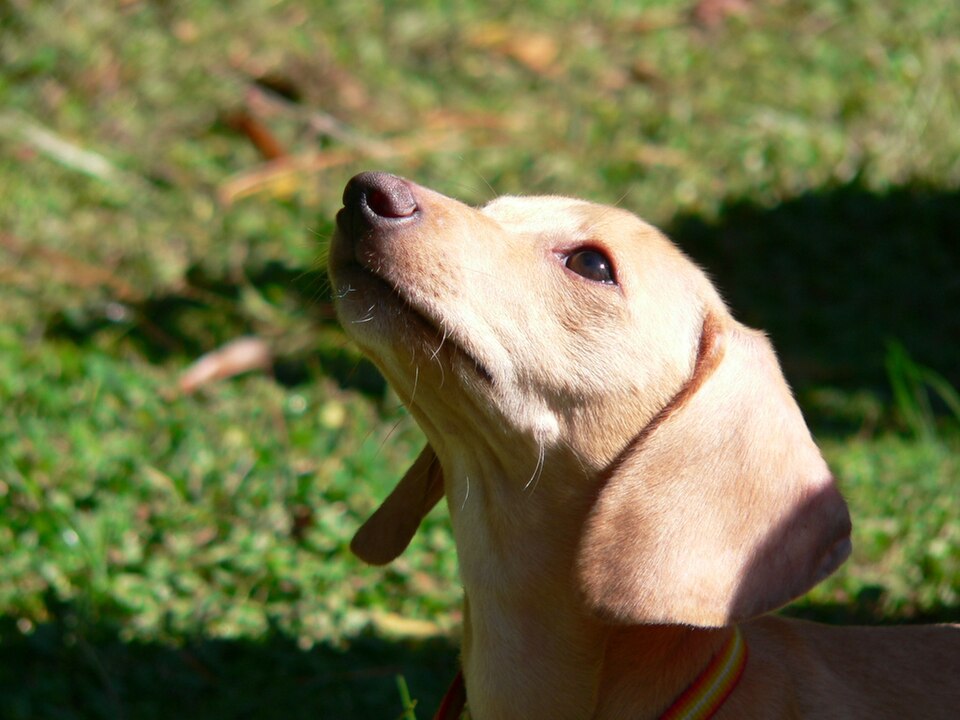
Cream dachshunds range from a pale gold to almost white. In the US, long-haired creams are often marketed as “English cream” dachshunds, as many come from British lines. Cream puppies are often born darker and lighten as they grow, so the color of a young puppy is not always the color of the adult.
Wild boar
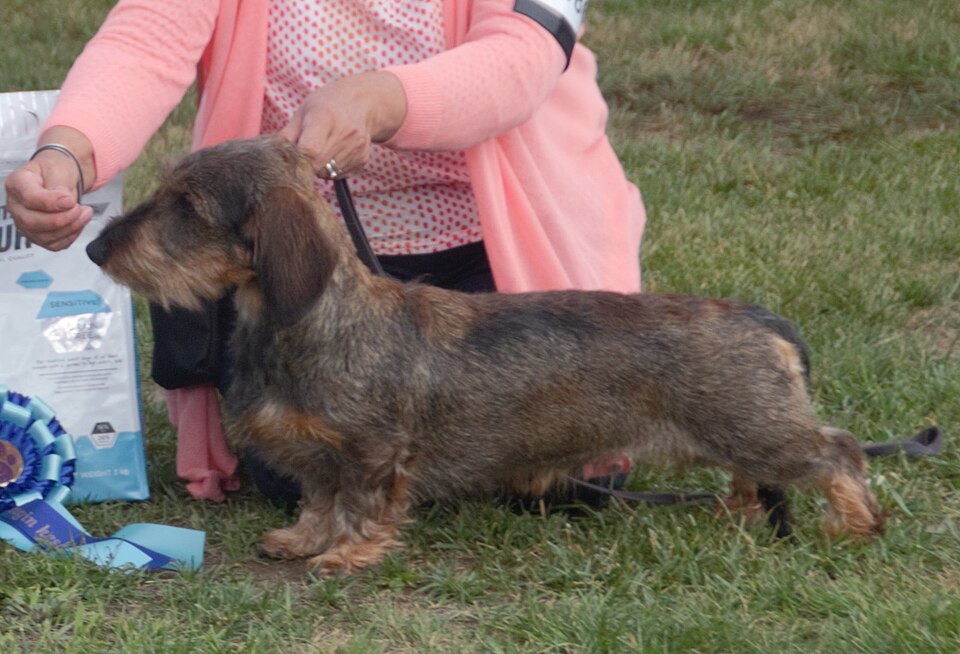
Wild boar is a grizzled mix of black, grey and brown, where each hair is banded with different colors. It is most often seen in wire-haired dachshunds, and gives them a rugged, outdoor look that suits their hunting background. Wild boar dogs often have tan markings similar to a black and tan underneath the grizzling.
Sable
Sable dachshunds have a red base with dark tips on each hair, so the coat looks like it has a dark overlay, often with a darker “widow’s peak” on the head. Sable is most often seen in long-haired dachshunds. It can be easy to confuse with a shaded red, and even breeders don’t always agree on which is which.
Blue and Isabella (fawn)
Blue and Isabella are dilute colors. Blue is a diluted black, giving a grey-blue coat, and Isabella, also called fawn, is a diluted chocolate, giving a soft greyish-brown coat. Both usually come with tan or cream markings, as blue and tan or Isabella and tan. Some dilute-colored dogs develop a condition called color dilution alopecia, which causes thinning hair and flaky skin. Not every blue or Isabella dog will get it, but if your dog’s coat starts thinning, have your vet check it.
Dapple
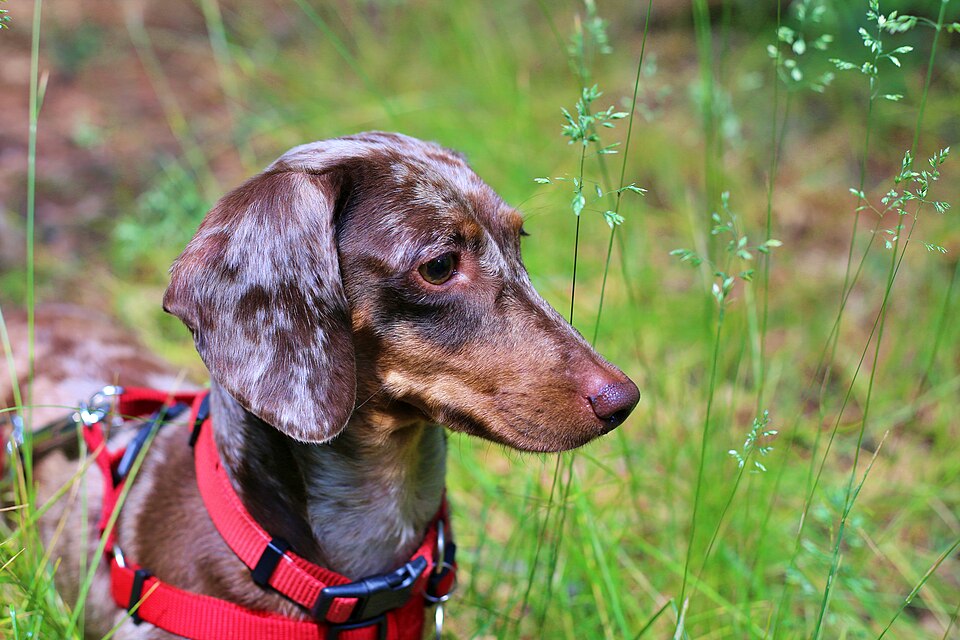
Dapple is the dachshund name for the merle pattern. It shows as lighter patches mixed with the base color, such as silver patches on a black and tan dog or lighter patches on a chocolate. Dapples sometimes have one or both eyes blue, or partly blue. The pattern can be very subtle on red or cream dogs, so a dog can carry the dapple gene without obviously looking like a dapple. This is one reason responsible breeders use DNA testing.
For more pictures of Dapple Dachshunds see here.
Double dapple, and why it matters
A double dapple comes from breeding two dapple dachshunds together. Puppies that inherit the dapple gene from both parents often have a lot of white in the coat, and they are at a much higher risk of eye and ear problems, including deafness, blindness and abnormally small or malformed eyes. Not every double dapple is affected, but the risk is high enough that many breed clubs discourage or ban dapple to dapple breeding.
If you are looking at a dapple puppy, ask the breeder whether both parents are dapple and whether the parents have been DNA tested. If you already own a double dapple, ask your vet to check their eyes and hearing.
Piebald
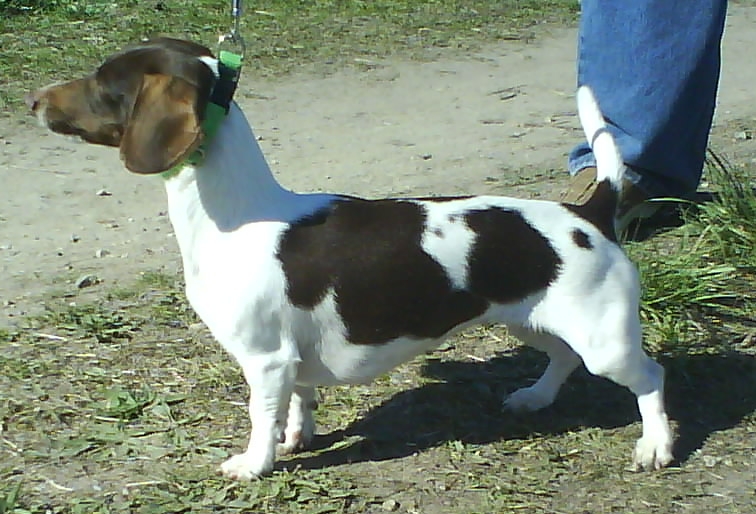
Piebald dachshunds have large white patches combined with their base color. Piebald is a different gene to dapple, and does not carry the same health concerns as double dapple. A piebald with a lot of white is sometimes called an extreme piebald.
Brindle
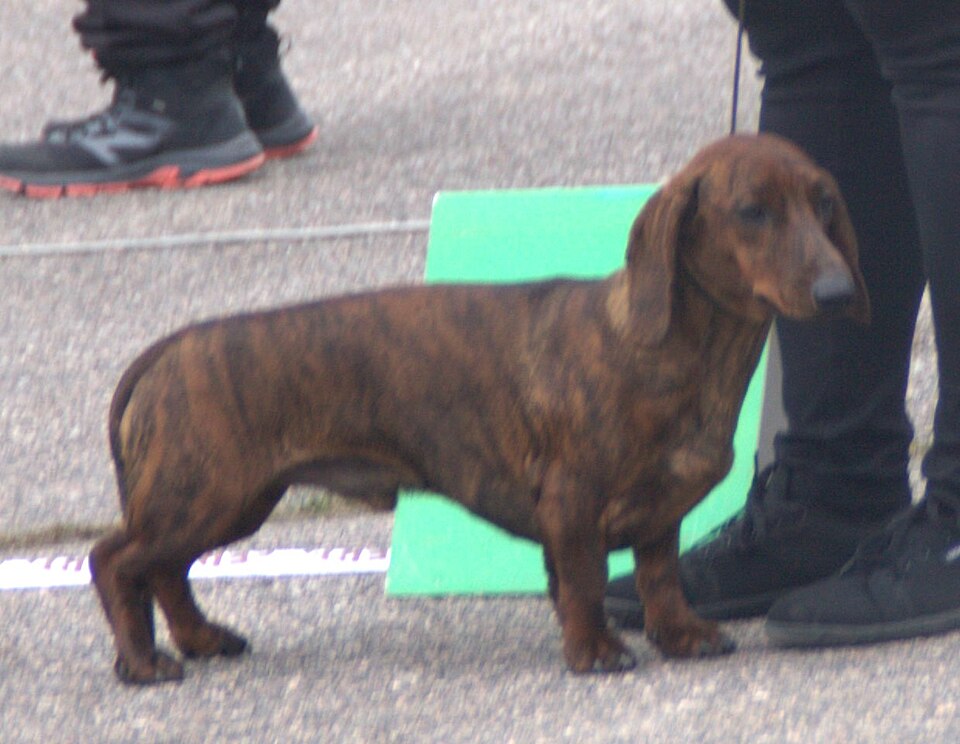
Brindle dachshunds have dark stripes over a red or tan base, a bit like a tiger. On a black and tan dog the brindle stripes only show in the tan areas, so the pattern can be quite subtle. A dog that is both brindle and piebald is called a brindle piebald.
Which type of dachshund is right for you?
Size and coat matter much more to day-to-day life than color. A miniature is easier to carry and travel with, while a standard is sturdier and handles longer walks. On grooming, the smooth coat is the least work, the long coat needs the most regular brushing, and the wire coat needs less brushing but should be hand-stripped. When choosing on color, avoid any breeder who is selling double dapples or breeding dapple to dapple, and be cautious of anyone charging a big premium for a “rare” color.
For more Dachshund related posts you may like
I would like to know what kind of dachshund that has chocolate, black and white to it called?
I would refer to that as a Tri-Color.